In my past experience as an Individual Contributor, I remembered being asked to present the work to the CMO, Chief Marketing Officer. The design nerd in me talked about how good the design was and how I was able to optimise the experience of the product. At the end of the session, I thought “It went pretty ok.” Literally right after the meeting, I was dragged by my manager and told, “Bro, I think you should highlight the big picture. Not the detail where the menu should be placed.” I was confused at the time. I didn’t understand what she meant by “big picture.” All in my head was, doesn’t the CMO need to hear and know the details and how I designed the experience?
Such a big ego in me on not asking my manager what does she meant, instead, I googled-it. One article after another, I still don’t understand. Time has passed.
Fast forward, I have found the simplest way to train your thinking. There is a popular framework that many consultants use in their presentations called “The Minto Pyramid”.
I thought Ryan Rumsey illustrated Minto Pyramid greatly. Let’s look at the example:

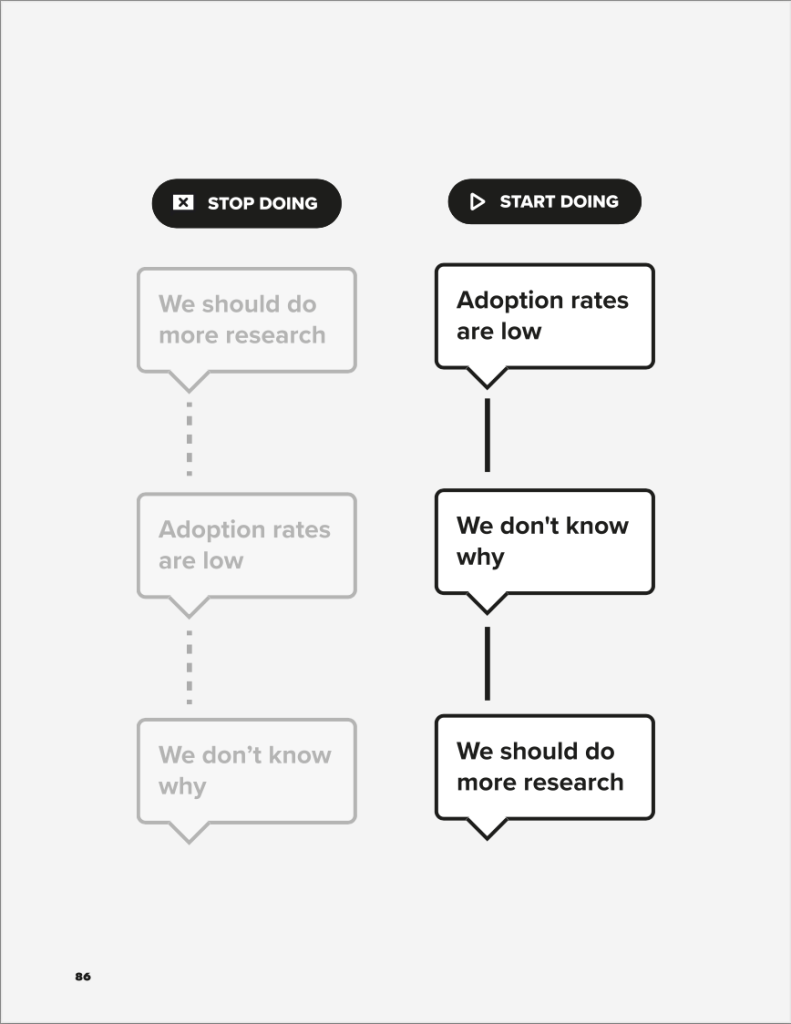
The trick is pretty simple: Start by slowly zooming out, from one level to a higher level. Structure your storytelling into three layers. First layer is Situation. Second is Complication. Third is Resolution.
Let me break it down for you. So, when you’re being asked to present your work,
Start with Situation
“Currently, our adoption rates are low.”
Followed by Complication
“We don’t exactly know why.”
Lastly, Resolution
“We should do more qualitative research to understand the whys”
Again, most designers communicate their storytelling starting from the Resolution—which you want to avoid if you want to communicate your plan effectively, be it to your manager, stakeholders, or senior leadership.
Remember the Minto Pyramid technique next time you’re communicating your design. Good luck!
 Ikram Faidzal