
SEEK Asia
Simplifying transitional commercial model through research and iteration
Context
SEEK Asia, a leading job marketplace in Southeast Asia, needed to unify its operational platforms by transitioning its pricing model from Ad Credits to Ad Budget, ensuring alignment across markets. This shift required user adoption strategies and experience refinement to minimise friction.
Role
As Lead Product Designer, I was responsible for leading the UX strategy, coaching and guiding the product designer involved in this project.
Year
2022

Business direction
Standardising commercial models across APAC to streamline operations and product offerings
As part of SEEK Asia’s platform unification, this initiative aimed to align monetisation strategy across markets by replacing the legacy credit-based ad model with the more flexible budget-based model.
Current model

Ad Credit
Buy credit package, then post the job ad
Analogy
Imagine you go to an arcade. You buy tokens (Ad Credits), and each token lets you play one game. If you want to play more games, you have to buy more tokens. This means you have to keep buying tokens every time you want to play.
To-be model

Ad Budget
Select Ad Budget package, then post the job ad
Analogy
Now, imagine instead of tokens, the arcade introduces a game card (Ad Budget). You load the card with money, and you can play as many games as the money on your card allows. You don’t need to keep buying tokens each time—you just use the balance on your card
Retain
Single job ad
*Contributes to 70% of revenue
Pay and post job ad when required
OKR
Asia hirers adopt the Ad Budget model with minimal friction.
KR #1 Single Job Ad posting conversion rate retain
KR #2 15% of hirers purchasing ad budgets
KR #3 Hirers contacting customer support for issues related is below 10%
Before

After

Findings from data
4% adoption of Ad Budget model remain stagnant
Only 38% of users scrolled beyond 1st fold
1 in 3 support tickets were about Ad Budget
Problem
Transitioning from Ad Credits to Ad Budget disrupted user workflows, requiring intuitive designs to ensure seamless adoption while retaining trust.
The potential impact on the user experience is unknown and largely speculative.

“This project generated a lot of interest from all functions. From leadership, marketing all the way down to the customer service team.”
Role and Stakeholders
My role and team was to be the bridge to ensure alignment as well as understand everyone’s expectations. I led on forming out the UX strategy, usability improvement, and stakeholder collaboration, ensuring the transition met both user and business goals.
Understanding overall direction
Senior leadership
Direction & Strategy
Growth & Marketing
Understand, alignment on value proposition
Thoughtful partners & stakeholders
Product managers
Direction alignment, Strategy
Researchers
Understanding target segments, Insights
Product designers
Guidance, coach, Design workshop, UT
Data analytics
Understand funnel, Collect data evidence
Engineers
Technical feasibility
“We decided to form out a “Task-force” team to oversee the project. After several weekly sync-ups, we thought best way was to assemble everyone in the same room to ease the alignment process. Eventually we landed decision to facilitate a design workshop. Whilst we recognised the potential “costs” of running such activities, however we believed the efforts outweigh the potential impact.”
Design process
Alignment between product triad
Ensuring seamless collaboration across Product Triad to drive clarity, efficiency, and impactful outcomes at every stage of the project. We ran a Design Thinking workshop spanning across 3 weeks.
Week one
Project scope
Expectations
Define success
Week two
Problem exploration
Ideation
Week three
Prioritisation
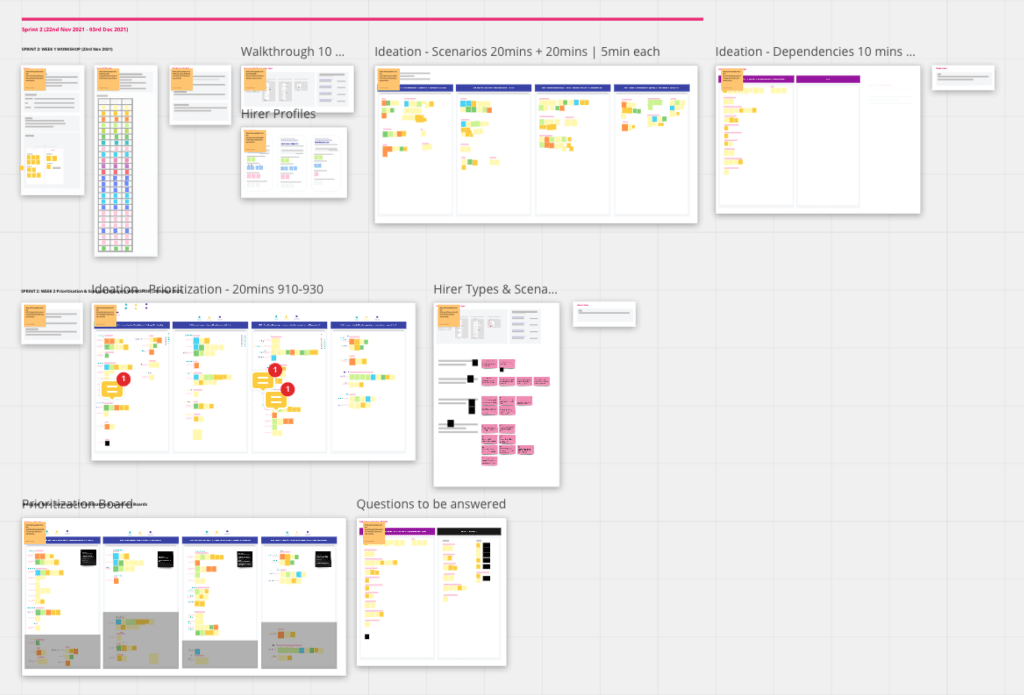

Before diving into user research and testing, we ran a series of collaborative design workshops with cross-functional teams. The goal was to map out different hirer profiles, align on assumptions, and prioritise what must be tested or validated.


Workshop outputs
Hirers profile

Decision maker
HR Managers, Business Owners, or Department Heads who approve hiring budgets and oversee recruitment performance.
“I want to know how much I’m saving and if it’s worth it over time.”
Needs and Goals
- Predictable and transparent pricing.
- Clear value demonstration before committing.
- Ability to compare cost-benefit between ad types.

Recruiter
Internal HR recruiters or talent acquisition specialists handling multiple job postings at once.
“I just need to get this posted ASAP. Don’t slow me down with too much info.”
Needs and Goals
- Fast, repeatable job ad flow.
- Clear CTA and minimal distractions.
- Guidance only when needed (not intrusive).

All-Rounder
Office admins, small business owners or generalists handling hiring along with other responsibilities.
“I don’t hire often, so I need to be sure I’m doing this right.”
Needs and Goals
- Simple language, intuitive flows.
- Clear expectations on what they’re buying.
- Confidence that they won’t “mess up” or overspend.
You need password to read the rest of the case study.
For recruiter and hiring manager, password are attached in my resume.
Issue on access email to ikramfaizal@gmail.com
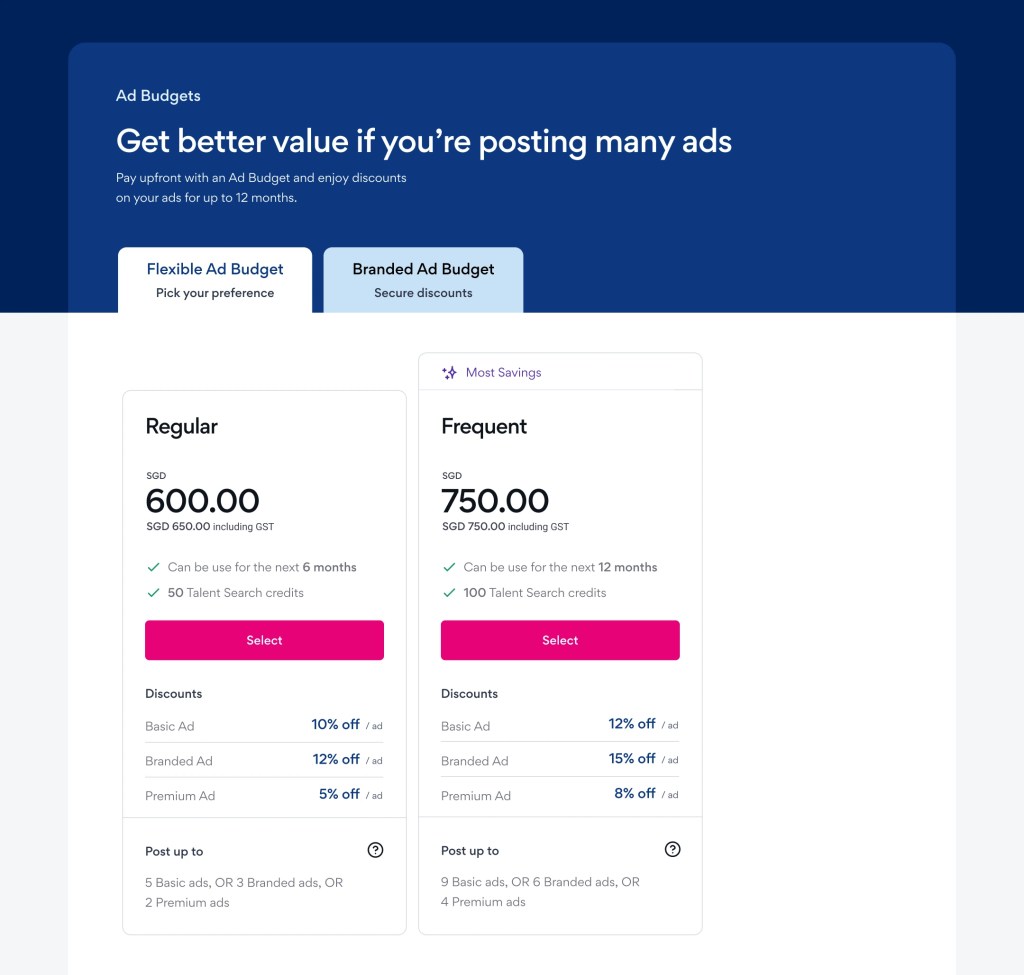
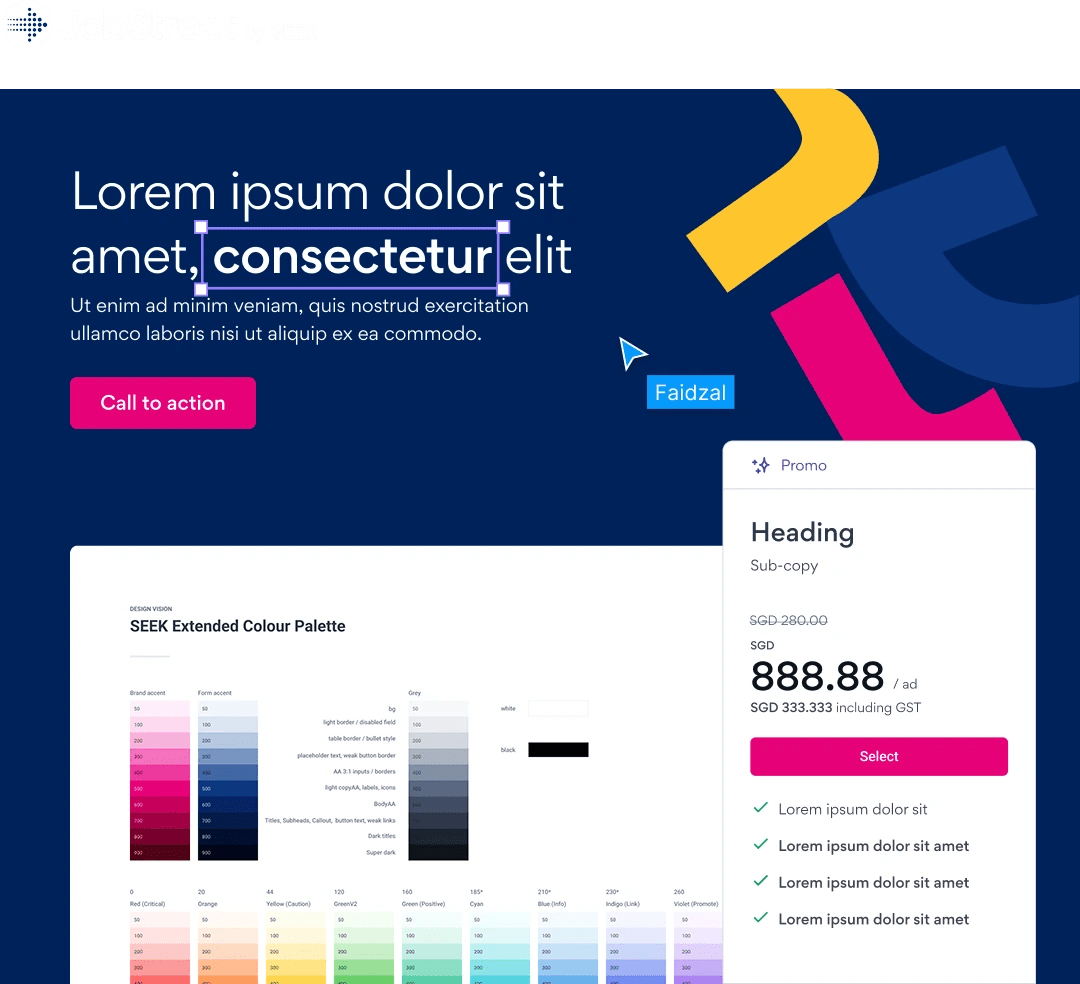
Final design


❤️
A huge thank you to my team, particularly Esmond who was driving this project. the big portion of the project was also from Janice. to all my product managers, engineers, data. Lastly, to all people who involved directly and indirectly.
Check out other work

Digi
Redesigning the entire digi.com.my with guided experience for clarity and conversion
Impact
10%↑
Increased in AOV
44%↑
In MCR
LINE
Case study In Progress
Shaping UX strategy and future experience directions for LINE Shopping
Impact
UX direction
For 2025
Digi
Case study In Progress
 Ikram Faidzal